Health & Safety at the Yard
Health & Safety at the Equestrian Yard: Keeping Horses and People Safe
Running an equestrian yard isn’t just about horses and riding — it’s also about creating a safe environment for staff, riders, and visitors. Health and Safety should always be a top priority, and taking the right precautions protects everyone while promoting smooth, enjoyable yard operations.
Why Health & Safety Matters
Equestrian environments are full of unique risks. From large animals and heavy equipment to uneven surfaces and physical work, accidents can happen if safety isn’t taken seriously. Implementing strong health and safety practices:
- Reduces accidents and injuries.
- Protects both people and horses.
- Ensures compliance with legislation and industry standards.
- Creates a professional, welcoming environment for clients and staff alike.
Key Areas of Focus in the Yard
1. Safe Horse Handling
Horses are powerful, intelligent animals — understanding their behaviour is essential. Staff should:
- Approach horses calmly and confidently.
- Recognise body language to prevent bites, kicks, or startle responses.
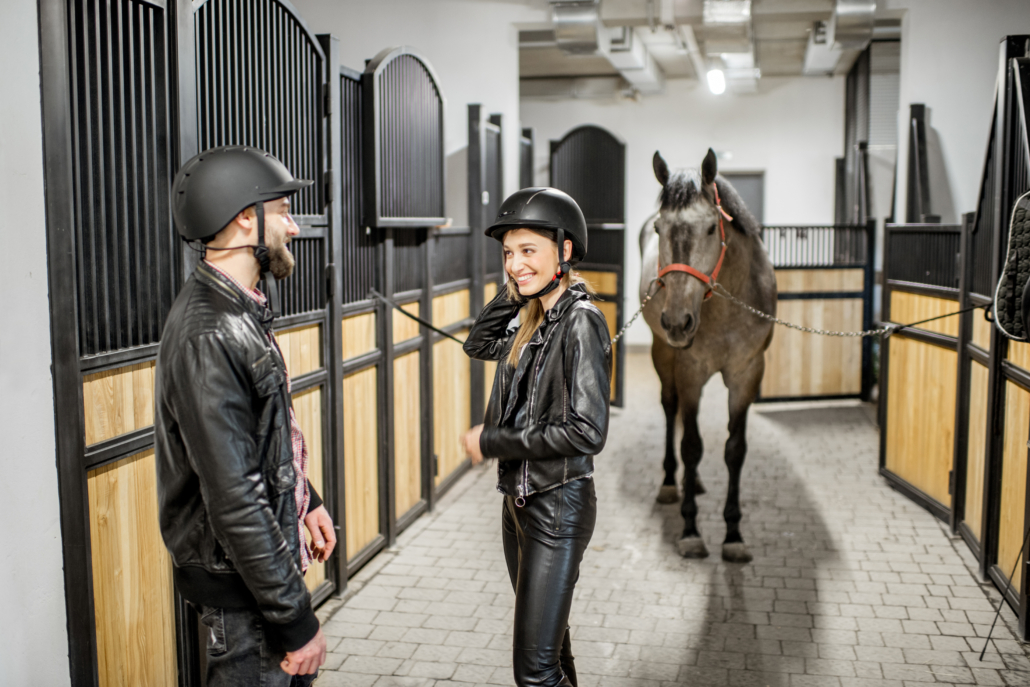
- Use correct equipment, such as gloves, helmets, and boots, when handling or riding.
2. Personal Protective Equipment (PPE)
Proper PPE reduces the risk of injury. Essentials include:
- Sturdy boots with a heel.
- Helmets for riding or handling in risky situations.
- Gloves, hi-vis jackets, or protective clothing when needed.
3. Keeping the Yard Safe
A well-maintained environment prevents accidents:
- Keep walkways, tack rooms, and arenas free from clutter.
- Regularly inspect and maintain equipment.
- Lift heavy items safely to avoid strains or injuries.
4. Health & Welfare of Horses
A safe yard is a healthy yard:
- Monitor horses for signs of illness or injury.
- Follow veterinary, farrier, and feeding schedules.
- Maintain cleanliness in stables, feed storage, and grooming areas to prevent disease.
5. Emergency Procedures
Everyone should know what to do in an emergency:
- Locate first aid kits, fire extinguishers, and exits.
- Keep emergency contacts handy (vet, farrier, yard manager).
- Report all accidents and near misses promptly.
6. Staff Training & Awareness
Training is key to a safe yard:
- Attend regular health and safety sessions.
- Stay up to date with industry best practices.
- Encourage open communication about risks or hazards.
7. Risk Assessments
Routine risk assessments keep hazards under control:
- Check arenas, stables, and outdoor spaces regularly.
- Update assessments when new equipment, activities, or staff join the yard.
Creating a Culture of Safety
Health and Safety isn’t just about rules — it’s about culture. Encouraging staff and riders to be vigilant, proactive, and communicative ensures a safe, happy environment for everyone.
✅ Bottom Line:
Prioritising health and safety protects your team, your clients, and your horses — and it makes your yard a professional, welcoming place to work and ride. A safe yard is a successful yard!
Help To Manage — where Business meets Horsmanship!